Few colleges count a legend among their alumni, but this year, environmentalists nationwide will remember a graduate from the Greenville College Class of 1928 as legendary.
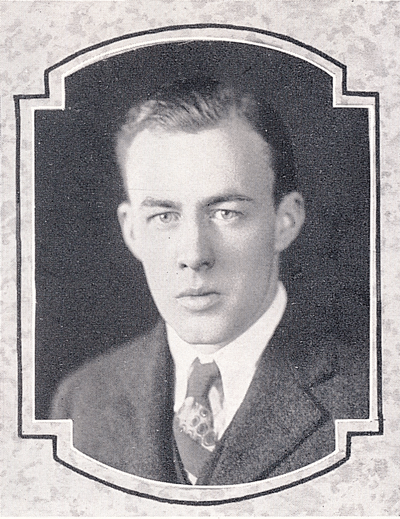
Howard Zahniser, a competitive debater in college, would one day ply his oratory skills on a national stage to champion the Wilderness Act of 1964, a bill he authored. The act defined wilderness in the U.S. and created a way for Americans to preserve their most pristine wild lands for future generations. It now protects more than 100 million acres in 750 wilderness areas nationwide.
This is the 50th anniversary year of the Wilderness Act, and events across the U.S. have renewed memories of Zahniser’s epic campaign to win its passage.
The achievement showcased his eloquent writing, profound patience and gift for sympathetic listening to all voices. He testified before Congress 18 times and drafted 66 versions of the act before it passed by a vote of 373 to one.
Though confident of victory, Zahniser did not live to see it. He died of heart failure shortly before President Lyndon Johnson signed the bill. “The hardest times were those when good friends tired because the battle was so long,” Dave Brower eulogized in the Sierra Club Bulletin. “Urging these friends back into action was the most anxious part of Howard Zahniser’s work. It succeeded, but it took his last energy.”
Poetic voice
In college, Zahniser diligently fed his hearty appetite for literature, poetry and debate. His interests in journalism and writing flourished and set the stage for his eventual role as a writer and publicist for America’s wilderness movement.
After working as a researcher and writer for various federal agencies, he pursued work with The Wilderness Society, where he served as executive secretary and eventually director. He also lent his poetic voice as editor to the Society’s journal, The Living Wilderness. Eloquence was his hallmark.
Persuasive, never caustic
“He was persuasive, but never caustic or vindictive, either in speech or print,” a colleague once observed. “His speeches were masterpieces of conviction and logic mixed with humor.”
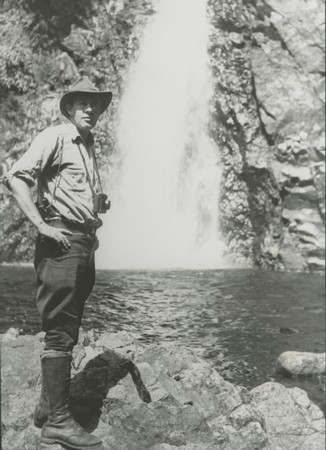
His remarks to an audience at the Sierra Club’s Wilderness Conference in 1961 could not contain his evangelistic zeal for wilderness preservation. “We are not fighting a rear-guard action; we are facing a frontier,” he said. “We are not fighting progress; we are making it.” In time, he was called a “legendary leader” and “savior of wild places.”
Wrestling with the wild before receiving the blessing
Zahniser’s passion remains alive at GC, where he received an honorary doctorate in 1957. Today’s students explore wild places through backpacking trips, canoeing, rock-climbing and the annual 10-day Walkabout in the Great Smoky Mountains. They emerge talking about the spiritual and healing connection Zahniser saw in the wilderness; they use words like “changed,” “transformed,” and “sacred.”
One student who has made the Walkabout journey multiple times, quoted Kathleen Norris: “Like Jacob’s angel, the region requires that you wrestle with it before it bestows a blessing. This is my spiritual geography, the place where I’ve wrestled my story out of the circumstances of landscape and inheritance.”
Personal experience of the wild may indeed be the most fitting anniversary tribute to the Wilderness Act and its chief architect.
 Morris Sampler