
If you pitch your tent in the “once a bad guy, always a bad guy” camp when the conversation turns to convicted offenders, then you’ll find little satisfaction in this story. Just exit here.
But . . .
- if you believe that goodness and grace can triumph over darkness,
- if you imagine the prayer “thy kingdom come, they will be done” can infiltrate a decrepit, overcrowded and violent place, and
- if you suspect that Jesus’ instruction to visit prisoners may benefit the visitor too
. . . then here’s a tale for you.
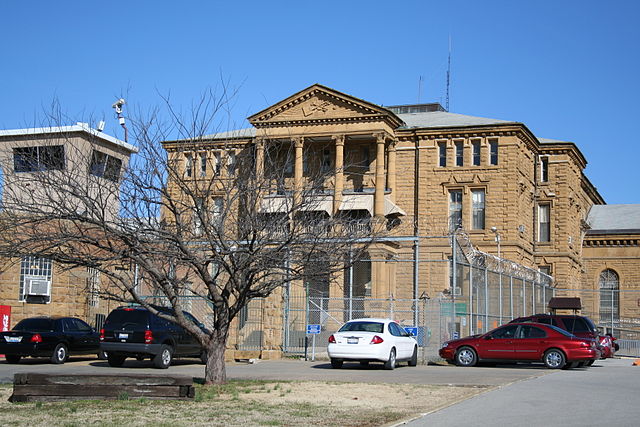
Actually, three tales, and they all flow out of Menard Correctional Center, the largest maximum-security prison in Illinois.
Doing life in a pressure cooker
Menard was built in 1878 to house 2,600 inmates. In 2013, its population swelled to 3,332.
The closure of Tamms Correctional Center in Southern Illinois, contributed to overcrowding at Menard. Tamms, a “super-max” facility, had housed particularly violent offenders with histories of attacking corrections officers and other prisoners.
The headlines that flowed out of Menard painted a gruesome picture:
- Menard Correctional Center Under Lockdown After Assault in Chapel
- The Deadly Consequences of Solitary With a Cellmate
- Third Prisoner Dies at Illinois’ Overcrowded Menard Prison
- Illinois prisons: Low-level inmate is killed by cellmate with violent past when Illinois prison officials OKd housing them together

Brother to brother
Grace, however, finds a way, even into the pressure cooker of Menard. There, Christ-followers—inmates who have come to embrace faith in Jesus Christ while incarcerated—make it their mission to encourage each other.
They “do” church in the yard when yard time is allowed. They sing together, they pray, they speak words about what they have learned and witnessed in how the Lord works, and they disperse, stronger for having gathered.
Flawed as it is, the fellowship inspires gratitude and a desire to do and be better. Here are three cases in point.
Four feet, eight inches
Double cells at Menard are as small as four feet, eight inches wide. A man can touch both walls with his extended arms. Imagine a cell the size of a parking space, and then read this account from DS.

“My new cellmate just had surgery to remove five bullets from various areas of his body. He lost a bone to a bullet wound in his foot when he was around 17. Also, he has one of those brain pacemaker-style stimulators implanted for seizure control.”
But seizures happen, and the tight quarters require DS to engage. Experience helps (his last assigned cellie was prone to seizures, too), but the crises are unpredictable and intense.
“God clearly sends these people to me,” DS reflects. “But, who am I that I should not drink of the cup God gives me?”
People who would gladly trade places with me
“[Prison] is not a place to grow old, although more and more of us are doing just that,” writes Kenneth E. Hartman in his insightful essay, “Sentenced to Life.”

At age 66, EM knows this. Suffering from severe chronic back pain, he eventually could no longer stand upright . . . then he required a wheelchair.
“But I take comfort in knowing that my pain is small in comparison to the pains and suffering my Lord and Savior Jesus Christ endured on the cross for my sin,” he writes. ”Besides, there are people who are paralyzed, without feeling, who would gladly trade places with me just so they could at least have some feelings. Hallelujah! So I won’t complain. I’ll just keep on calling on the Lord!”
Pop-tarts, shoes, and intentional grace
Some Christian brothers at Menard established a “grace box” to demonstrate charity in Christ’s name. The box contains toiletries, food and various items valued by inmates. Brothers who “have” collect and distribute the items to brothers in need. The grace box resembles the “poor boxes” instituted by gangs, but unlike the poor boxes:
- Its caretakers do not demand allegiance in return for their gifts.
- They do not require repayment or double repayment.
- They do not seek to control others through usury.
- They do not use the box as part of a system to institute rules and administer punishments.
AB, who personally follows the biblical teaching of “tithing” (giving ten percent of one’s income to God’s work), shared this story about the Grace Box.

“One man who recently became a Christian and who receives only $10 a month gave a box of Pop-Tarts to the Grace Box. The Pop-Tarts cost $1.48. His obedience was encouraging. A short time later, another man who knew that this young Christian needed shoes gave him a new pair of shoes! It’s exciting to see God honoring obedience.”
About that gift for today . . .
And here’s the gift: If goodness and grace can make a way into the cells, prison yards, conversations and prayers of dozens of inmates like DS, EM and AB, then they can make a way into the work spaces and conversations where many of us carry out our productivity.
Hope, joy, growth and gratitude know no bounds. We can, as one of the brothers often pens at the end of his letters, “Be blessed on purpose.”
Photos from top: (1) wire by Marko Lovric from Pixabay (2) cell by Ichigo121212 from Pixabay (3) parking space by Harut Movsisyan from Pixabay, (4) wheelchair by Espressolia from Pixabay (5) running shoes by Hans Braxmeier from Pixabay
 Morris Sampler